

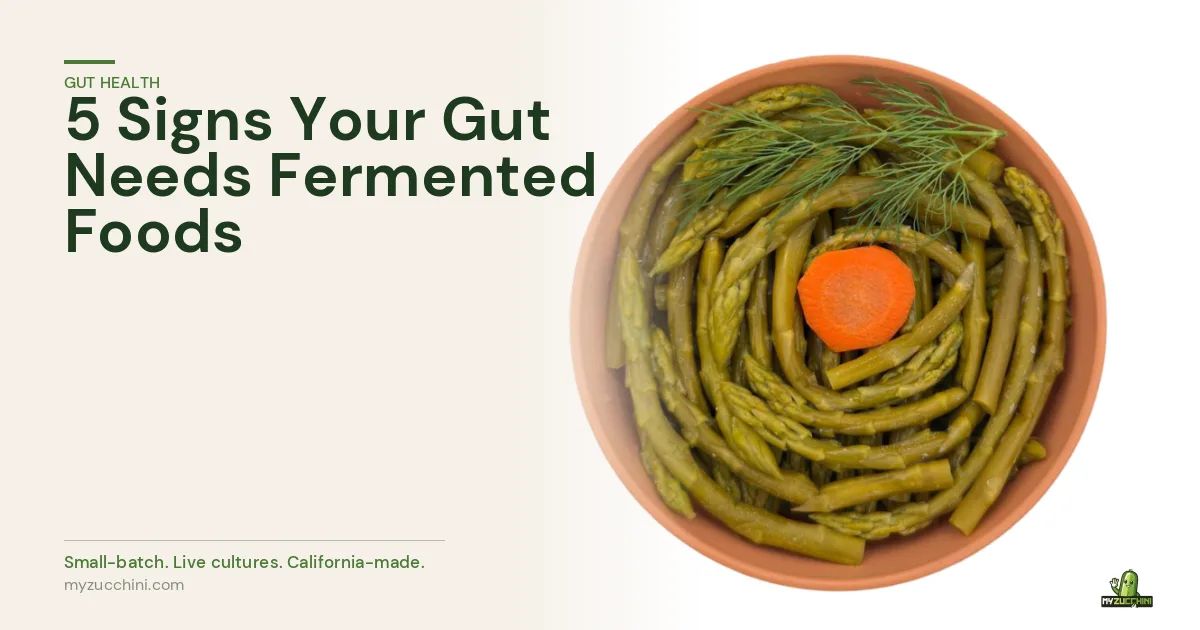
Your gut microbiome doesn’t communicate in words, but it does send signals. Many common, persistent health complaints — from digestive discomfort to recurring colds — may be related to an imbalanced or low-diversity microbiome. Here are five signs that your gut might benefit from more live-culture fermented foods in your daily diet.
1. Frequent Bloating or Digestive Discomfort
Occasional bloating after a large meal is normal. But if you regularly feel bloated, gassy, or uncomfortable after eating — regardless of what you ate — this may signal an imbalance in your gut bacteria. The medical term is dysbiosis: an unfavorable shift in the ratio of beneficial to harmful bacteria.
Beneficial bacteria help process food compounds that humans cannot digest independently, including certain carbohydrates and fibers. When these bacteria are in short supply, undigested material ferments in the colon, producing excess gas and discomfort. Adding small, consistent amounts of fermented vegetables to your diet may help restore a more favorable bacterial balance over time.
2. Getting Sick More Often Than You Should
If you find yourself catching colds frequently — particularly if you live a healthy lifestyle otherwise — your gut microbiome may be under-supporting your immune system. Roughly 70 percent of immune function is located in gut-associated lymphoid tissue (GALT), and the health of your microbiome directly influences how well your immune system responds to threats.
Some research suggests that people who consume fermented foods regularly may experience fewer disruptions to their normal health during cold and flu season, though this is an area where study results vary. Supporting gut diversity is one reasonable approach to overall wellness — not a replacement for medical care. For active Californians outdoors year-round, it’s a consideration worth taking seriously.
3. Persistent Low Energy or Brain Fog
Energy and mental clarity are downstream of dozens of variables, but the microbiome’s role in both is increasingly documented. Research shows the gut produces a wide range of neurotransmitter precursors and signaling molecules that communicate directly with the brain — a pathway scientists call the gut-brain axis.
An imbalanced microbiome has been associated in early studies with higher rates of self-reported fatigue and difficulty concentrating. If you regularly feel foggy or dragging without an obvious cause, gut health is one factor worth examining — alongside sleep quality, hydration, and overall diet.
4. Irregular Bowel Movements
Healthy digestion produces regular, comfortable bowel movements — typically once per day, though there is meaningful variation between individuals. Consistent constipation, loose stools, or alternating between the two can all reflect dysbiosis.
A well-populated gut microbiome helps regulate intestinal transit time. The short-chain fatty acids produced by beneficial bacteria — especially butyrate — play a critical role in maintaining the health and motility of the intestinal lining. Fermented vegetables are among the most effective dietary sources of both live bacteria and the prebiotic fiber those bacteria need to produce butyrate.
5. Sugar and Carbohydrate Cravings
Fewer people make this connection, but emerging research suggests gut bacteria can influence food cravings — not just digestion. Certain harmful bacteria and yeast species (notably Candida) preferentially consume simple sugars and starches, and some research suggests they may influence host behavior — signaling hunger for more of the foods they need to thrive.
A microbiome dominated by beneficial Lactobacillus species, on the other hand, tends to produce a more stable appetite and fewer intense cravings. While the research is still developing, many people who consistently eat fermented foods report a gradual reduction in sugar cravings over several weeks.
What to Do
Recognizing these signs is the first step. The second is consistent action. Adding fermented vegetables to your daily routine — even just one to two tablespoons per day — can produce meaningful changes in microbiome composition within two to four weeks, according to recent research.
Start with mild options like fermented cucumbers if you’re sensitive, and work up to more complex fermented foods over time. Pair them with high-fiber foods (the prebiotic component that feeds the bacteria you’re adding) for the best results.
Want to learn more about the gut-health connection? Visit our Gut Health resource page. Ready to stock up? Shop MyZucchini’s fermented vegetable collection — made in Sacramento, California.
Related Reading
- Gut Health Benefits of Fermented Vegetables
- Complete Beginner’s Guide to Fermented Foods
- 7-Day Fermented Foods Meal Plan
Shop MyZucchini Products