

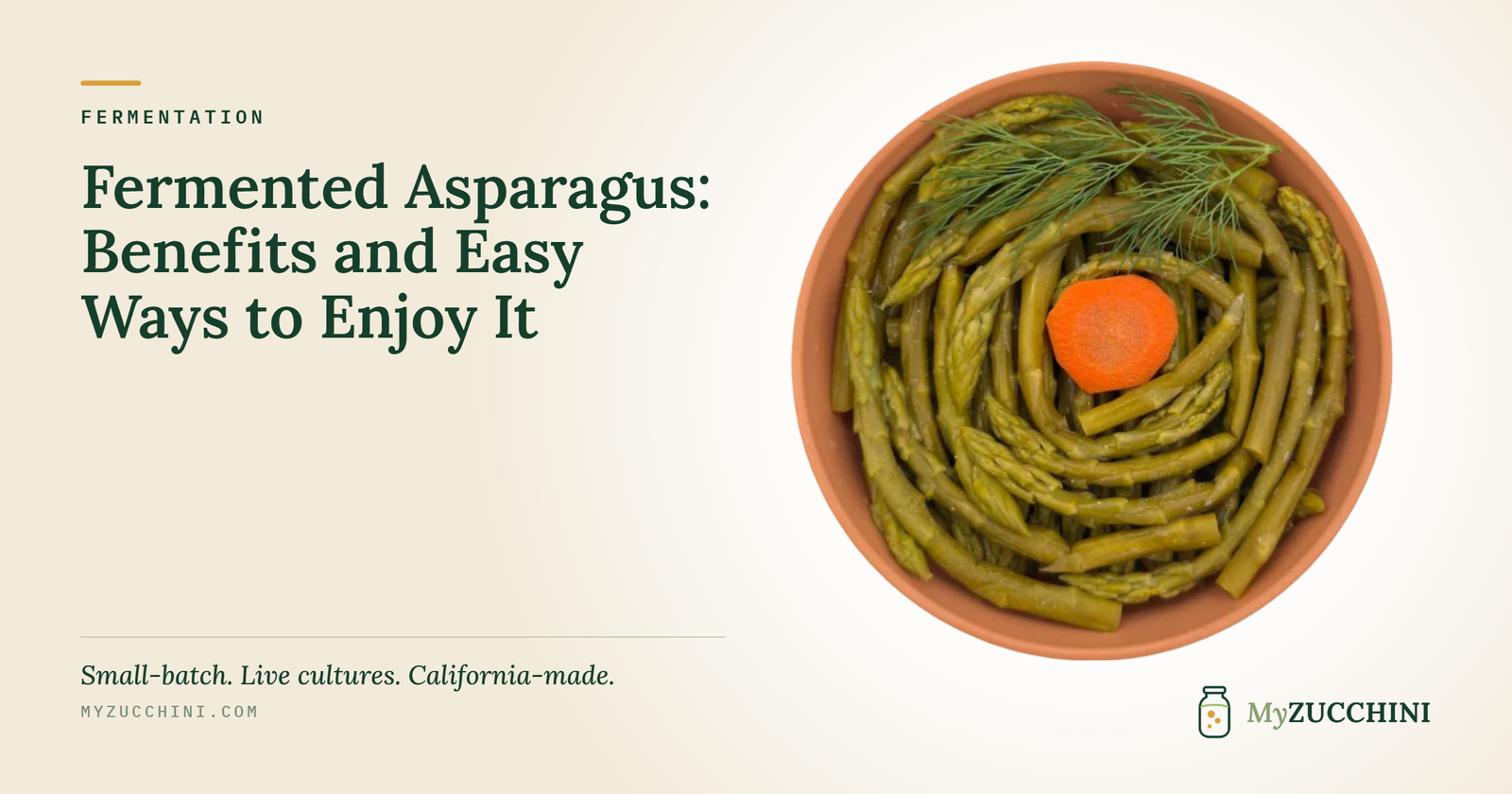
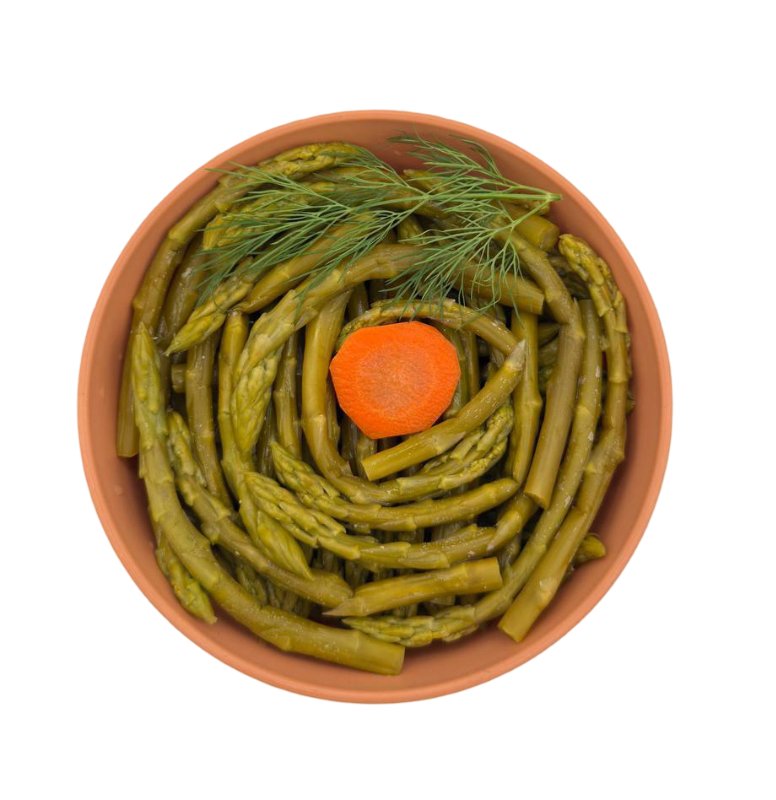
Asparagus is already a favorite spring vegetable. But have you tried it fermented? Fermented asparagus takes crisp, green spears and turns them into something tangy, crunchy, and full of live cultures. It’s a simple food with a long history. And it fits easily into your daily meals.
At MyZucchini, we make our fermented asparagus in small batches. We use raw, whole spears. We never cook or pasteurize them. This keeps the natural crunch and the live cultures intact.
What Makes Asparagus “Fermented”?
Fermentation is an old way to preserve food. It uses salt, water, and time instead of vinegar or heat. Good bacteria break down natural sugars in the vegetable. This creates a sour, tangy flavor. It also creates live cultures, similar to what you find in yogurt or sauerkraut.
We use a method called lacto-fermentation. If that word sounds new, don’t worry. Our lacto-fermentation 101 guide breaks it down in plain language. In short, salt creates a safe space for helpful bacteria to grow. These bacteria crowd out unwanted microbes. The result is a naturally preserved, tangy vegetable.
Our asparagus ferments for about 21 days. This gives it time to develop a deep, tangy flavor. It also gives the live cultures time to grow.
The Benefits of Fermented Asparagus
Fermented foods are a food, not a medicine. We won’t tell you they treat or cure anything. But many people enjoy fermented vegetables as part of a balanced diet.
Here’s what we can say about fermented asparagus:
It’s a source of live cultures. Raw fermentation means we don’t heat the product after fermenting. This helps preserve the live cultures that form during the process.
It has a bold, tangy taste. The natural fermentation process gives the spears a bright, sour flavor. It’s different from pickled asparagus made with vinegar.
It keeps a satisfying crunch. We use fresh, firm spears. Fermentation softens them slightly but keeps that snap you expect from good asparagus.
It’s traditionally valued. Fermented vegetables have been part of human diets for thousands of years, long before refrigerators existed. People across many cultures fermented vegetables to store them through the seasons.
If you’re curious about how live cultures work in the body, our guide to probiotics explains the basics in simple terms.
How We Make It: A Look Inside Our Process
MyZucchini was founded by Stanislav Suprovych, who grew up watching his family ferment vegetables at home. He brought that tradition to Sacramento, California, and turned it into a small business built on care and consistency.
Every vacuum-sealed bag of our fermented asparagus is made in our Sacramento facility. This facility is registered with the state and inspected on a regular basis. We follow strict food safety steps at each stage, from washing the spears to vacuum-sealing the bags.
We also believe in full transparency. That’s why every single vacuum-sealed bag carries a real batch number. This number tells us exactly when that product was made and what ingredients went into it. If you ever have a question about a product, that batch number helps us trace it back to the source.
Each spear is hand-trimmed before fermenting. We sort out any pieces that aren’t firm or fresh enough. Only the best spears make it into our vacuum-sealed bags.
How to Enjoy Fermented Asparagus
Fermented asparagus is easy to add to almost any meal. Here are some simple ideas:
Straight from the jar. This is the easiest way to try it. Just open the jar and enjoy a few spears as a snack.
On a snack board. Pair it with cheese, crackers, and cured meats. The tangy crunch balances out rich, salty foods.
In a sandwich or wrap. Swap out regular pickles for fermented asparagus. It adds a punch of flavor without extra sauce.
Chopped into salads. Slice the spears and toss them into a green salad or grain bowl. They add texture and a bright, sour note.
As a garnish for cocktails or mocktails. A single spear makes a fun, unexpected drink garnish, much like a pickled green bean.
Alongside eggs. Many people enjoy a few spears next to scrambled eggs or an omelet at breakfast.
Because we don’t cook or pasteurize our asparagus, we recommend keeping it in the refrigerator at all times. This helps protect the live cultures and keeps the texture crisp.
New to Fermented Foods? Start Here
If fermented vegetables are new to you, that’s okay. Everyone starts somewhere. Our beginner’s guide to fermented foods walks you through the basics. It covers what to expect in taste, texture, and smell.
We suggest starting with a small amount. A few spears with a meal is a great way to see how you like the flavor. Some people love the tang right away. Others build up a taste for it over a few tries.
A Simple Food, Made With Care
Fermented asparagus is more than a trendy snack. It’s a simple food made the old way, with just vegetables, salt, and water. Every product from MyZucchini is made in our Sacramento facility, checked for quality, and stamped with a real batch number so you always know where it came from.
Ready to try it for yourself? Explore our fermented asparagus and taste the tangy, crunchy result of real fermentation, made in small batches by people who care about the process.