
Fermented ginger is a small food with a big personality. It is spicy, tangy, and a little sour. Many people enjoy it as a daily habit, not just a garnish. At MyZucchini, we make ours the old way, with time, salt, and patience.
This guide shows you simple ways to eat fermented ginger every day. We will also explain what makes it different from raw ginger, and why our founder Stanislav Suprovych believes slow fermentation matters.
What Is Fermented Ginger, Exactly?
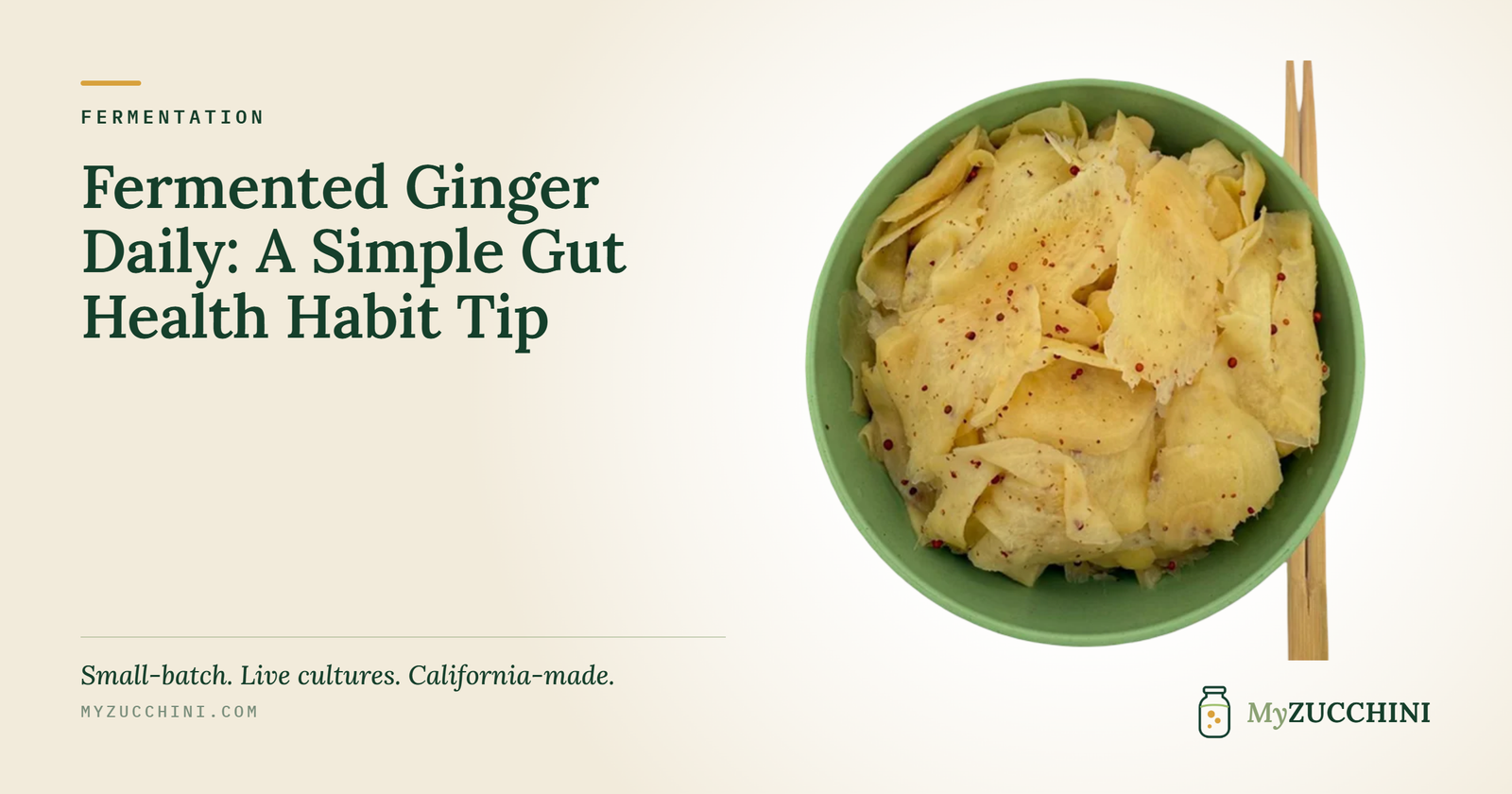
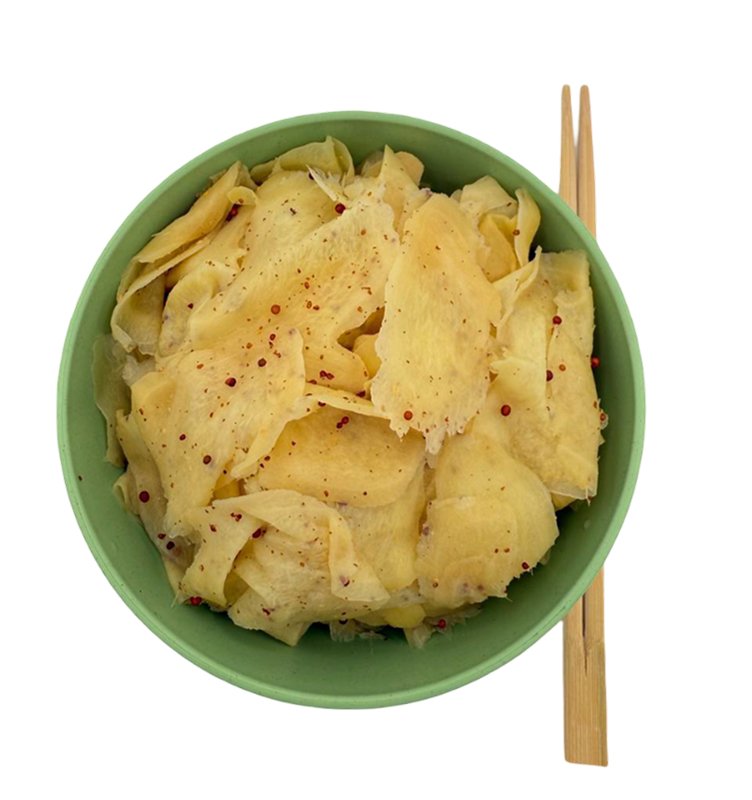
Fermented ginger starts as fresh ginger root. We slice it thin, then let natural bacteria break it down over time. This process is called lacto-fermentation. If you want the full science made simple, check out our lacto-fermentation 101 guide.
During fermentation, good bacteria multiply. These bacteria are often called probiotics, which simply means “live cultures that may support your gut.” If that term is new to you, our probiotics guide breaks it down in plain language.
The result is ginger that tastes brighter than raw ginger. It has a gentle fizz and a deep, complex flavor. It is traditionally valued in many cultures as a daily food, not a medicine.
Why Add It to Your Routine?
Fermented foods are a food, not a medicine. We will not tell you it cures anything. What we can say is this: fermented ginger is a source of live cultures, and many people enjoy adding it to meals for variety and flavor.
It also fits easily into a normal day. You do not need special tools or a big plan. A small spoonful is enough to start.
Simple Ways to Eat Fermented Ginger Every Day
Here are easy ideas that take one minute or less.
1. Add it to rice or grain bowls. Chop a few slices and mix them in. The tang cuts through rich or heavy food.
2. Stir it into soup. Add it after cooking, not during. Heat can harm live cultures, so it is best to add fermented ginger once your soup has cooled a bit.
3. Top your eggs or avocado toast. A few thin slices add crunch and a spicy kick.
4. Mix it into salad dressing. Chop it fine, then whisk with oil and a splash of vinegar.
5. Eat it straight from the jar. One or two slices with lunch or dinner is plenty for most people.
Start small. Try one teaspoon a day for the first week. Some people build up to one to two tablespoons daily. Everyone is different, so listen to your body and adjust as needed.
Tips for Getting the Most from Your Jar
Keep refrigerated at 33–41°F (1–5°C). Cold temperatures help protect the live cultures inside. Always use a clean spoon to avoid introducing new bacteria into the jar.
Try to eat fermented ginger raw or lightly warmed. High heat, above 115°F, can reduce the live cultures. That is why we suggest adding it after cooking, not during.
If you are new to fermented foods in general, our beginner’s guide to fermented foods covers other easy options too, like sauerkraut and kimchi.
How MyZucchini Makes Fermented Ginger
Our founder, Stanislav, started MyZucchini because he grew up eating fermented vegetables at home. He wanted Sacramento to have access to the same real, slow-made food.
Every batch of our fermented ginger is made in our registered and inspected California facility right here in Sacramento. We follow strict food safety rules, and our facility is checked regularly.
We ferment each batch for at least 21 days. This slow timeline allows natural bacteria to fully develop. We never use vinegar shortcuts or added preservatives.
Every single vacuum-sealed bag carries a real batch number. This means we can trace each product back to the exact day it was made, the ingredients used, and the fermentation time. It is a small detail, but it matters to us. It shows our commitment to quality you can trust.
A Few Numbers Worth Knowing
To help you understand our process, here are some facts about how we make fermented ginger:
We ferment each batch for a minimum of 21 days. Our facility undergoes regular state health inspections. Each vacuum-sealed bag is hand-labeled with a unique batch number for full traceability. We recommend starting with just 1 teaspoon per day if you are new to fermented foods.
Final Thoughts
Fermented ginger is an easy, tasty way to bring more live cultures into your daily meals. It is not a cure or a treatment. It is simply a traditional food, made the slow way, that many people enjoy adding to their routine.
Whether you spoon it over rice, stir it into soup, or eat it straight from the jar, a little bit each day can become a simple, satisfying habit. Try it for a week and see how it fits into your life.